WOSP High Output Starter Motors
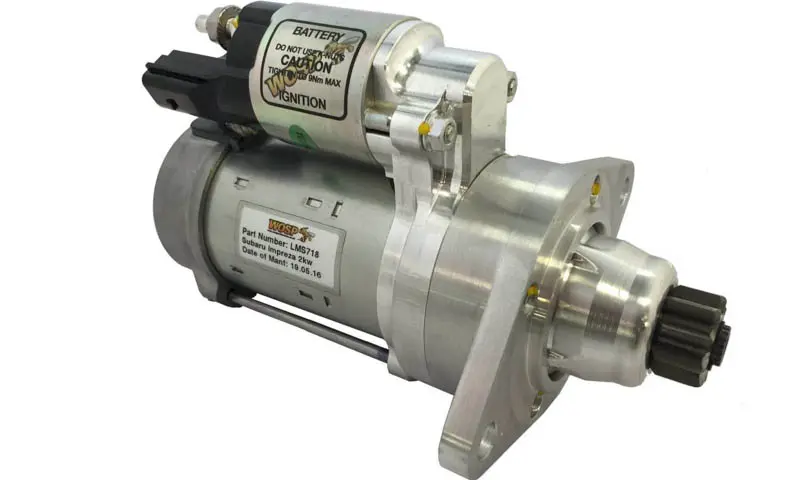
WOSP starter motors turn your engine over faster and use less power, making starting your car a genuine flick of the key experience.
Modern starting power for classic cars
When a starter motor begins to fail, it places increased strain on the battery and other components within the starting circuit. Addressing the issue at an early stage can prevent wider electrical problems and avoid costly repairs. Even where an existing starter motor is still functioning, an upgrade can deliver clear reliability benefits.
WOSP starter motors offer a modern, high-efficiency alternative to traditional units. Their design reduces current draw, delivers more consistent cranking speed, and places less load on the battery, particularly during cold starts or after periods of inactivity.
To understand the advantages fully, it is helpful to look at how modern WOSP units differ from traditional starter motor designs.
What is the difference?
Most cars registered before 1980 are fitted with a direct-drive starter motor. In this design, the motor armature and the Bendix drive, which engages with the flywheel ring gear, are directly connected and aligned on the same axis. When the ignition key is turned, the Bendix drive moves forward, meshes with the flywheel, and turns the engine at the same speed as the electric motor.
Direct-drive starter motors are large, heavy, and draw a significant amount of current. If the battery is in marginal condition, starting performance is often poor, and failure to start is common.
Gear-reduction starter motors use a set of reduction gears to convert the high speed of a smaller, more efficient electric motor into increased torque at the flywheel. In practice, they typically draw up to 50% less current while delivering greater cranking force, significantly improving starting reliability.
Benefits of a WOSP starter motor?
| Feature | Direct-drive starter motor | WOSP gear-reduction starter motor |
| Typical application | Most cars built before 1980 | Modern replacement for classic cars |
| Motor design | Large, low-speed electric motor | Compact, high-speed motor with reduction gears |
| Current draw | High | Up to 50% lower |
| Torque at flywheel | Moderate | High |
| Cranking performance | Strong when new, degrades with wear | Consistent and reliable |
| Performance with marginal battery | Poor | Significantly improved |
| Weight | Heavy | Lighter |
| Internal support | Bushes | Bearings |
| Wear characteristics | Bush wear leads to misalignment | Reduced wear and improved alignment |
| Heat soak resistance | Limited | Improved due to compact design |
| Maintenance requirements | Increases as components wear | Minimal |
| Suitability for modern use | Limited | Well suited |
Get your car booked in today
There is a huge range of different options so to make sure you have exactly the right information please fill out the following request form and we will be able to send you a bespoke quote. For a ball park, labour and wiring materials rarely goes beyond £250 + VAT.
CALL – 01869 221 870

To install this Web App in your iPhone/iPad press
 and then Add to Home Screen.
